
At Trophy Custom Homes, our Veteran community holds a special place in our hearts. We are deeply grateful to the men and women who have served our country, protected our freedom, and sacrificed alongside their families.
That gratitude extends to something close to our work: the ability to feel comfortable, confident, and independent at home.
For a Veteran living with a disability or changing mobility needs, everyday features can become obstacles. A few steps at the front door. A bathroom that is difficult to navigate. A doorway that cannot comfortably accommodate a wheelchair or walker.
Thoughtful home design can help address those challenges. And for eligible Veterans, several U.S. Department of Veterans Affairs programs may help pay for qualifying improvements.
Aging in Place Is About Independence—not Just Age
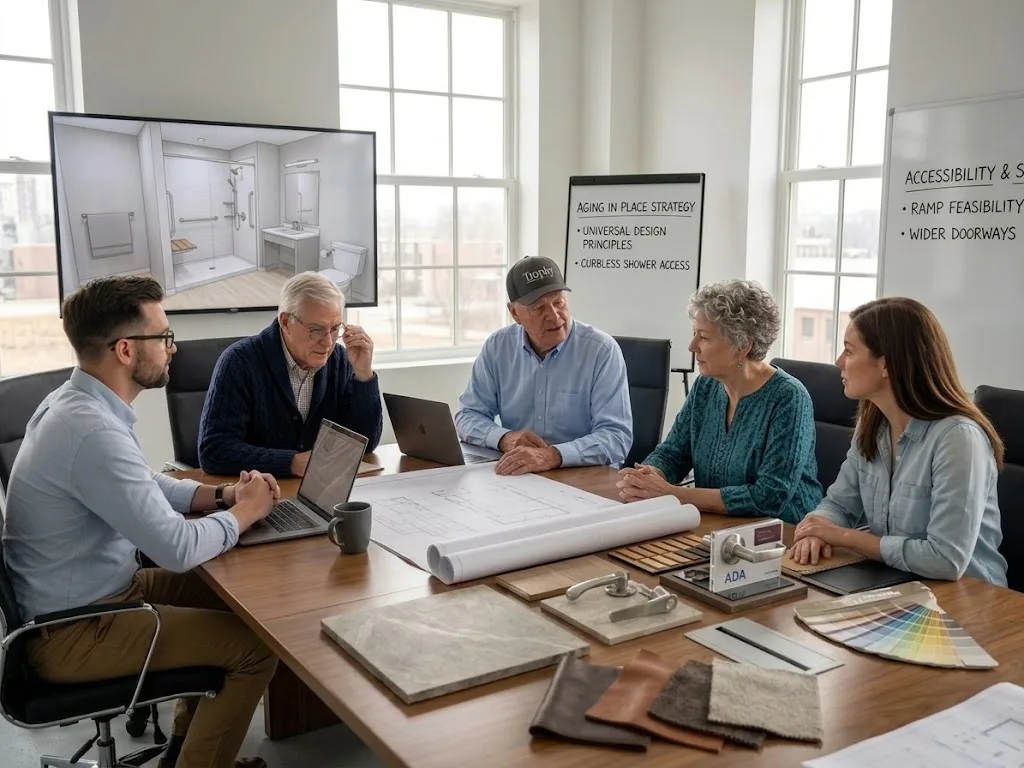
Aging in place means creating a home that supports daily life as needs change. For Veterans, accessible design may be important at any age, whether because of a service-connected injury, another medical condition, or changes that develop over time.
Depending on individual needs, helpful features may include:
- Step-free entrances and accessible routes through the home.
- Wider doorways and room to maneuver with mobility equipment.
- Roll-in showers and accessible bathroom layouts.
- Kitchen sinks and counters positioned for easier use.
- A bedroom and full bathroom on the main living level.
- Better lighting and easier-to-operate fixtures and hardware.
Not every feature qualifies for VA funding. The appropriate design—and potential coverage—depends on the Veteran’s needs and the specific program’s requirements.
1. Specially Adapted Housing: Support for Buying, Building, or Adapting a Home
The Specially Adapted Housing (SAH) grant can help eligible Veterans and service members with certain qualifying service-connected disabilities buy, build, or change a permanent home.
For fiscal year 2026, the maximum SAH grant amount is $126,526.
Applicants must own or plan to own the home and meet the VA’s disability requirements. Qualifying conditions include certain losses or loss of use of limbs, blindness meeting specified criteria, and certain severe burns. Eligibility is specific; a disability rating alone does not establish qualification.
For someone whose current home cannot reasonably accommodate their needs, this program may support a more substantial housing solution—not simply a small modification.
Review official VA eligibility requirements for SAH and SHA grants.
2. Special Home Adaptation: Another Path to a More Accessible Permanent Home
The Special Home Adaptation (SHA) grant helps eligible Veterans and service members buy, build, or change a permanent home that they or a family member own or will own.
For fiscal year 2026, the maximum SHA grant amount is $25,350.
This program has different qualifying disability requirements from SAH. The VA lists the loss or loss of use of both hands, certain severe burns, and certain respiratory or breathing injuries.
SAH and SHA are not general renovation allowances available to all Veterans. They are targeted benefits with specific eligibility rules. The VA allows eligible recipients to use SAH or SHA funding up to six times over their lifetime, subject to the applicable total maximum—not a new full grant each year.
3. Temporary Residence Adaptation: Help While Living With Family
Sometimes the immediate need is not a permanent home. A Veteran may be living temporarily with a family member while planning a longer-term arrangement.
The Temporary Residence Adaptation (TRA) grant may help modify that family member’s home when the Veteran qualifies for SAH or SHA.
For fiscal year 2026, the maximum TRA amounts are:
- $50,961 for those who qualify for SAH.
- $9,100 for those who qualify for SHA.
The Veteran does not have to own the family member’s home. The residence must meet the program’s temporary-living requirements.
Ask the VA how TRA use affects your overall adapted-housing entitlement rather than assuming these amounts can simply be added together.
Learn more about TRA eligibility and funding.
4. Home Improvements and Structural Alterations: Medically Necessary Changes
The Home Improvements and Structural Alterations (HISA) benefit may help pay for medically necessary changes to a primary residence. Unlike SAH and SHA, HISA can address qualifying needs associated with either service-connected or non-service-connected conditions.
Examples include:
- Permanent ramping to improve access to the home.
- Bathroom changes that allow use of essential sanitary facilities.
- Lowering sinks or counters for accessibility.
- Plumbing or electrical changes required for home medical equipment.
The VA lists lifetime benefit limits of $6,800 or $2,000, depending on the applicable eligibility category. These are not annual allowances.
HISA requires medical justification, including a prescription written or approved by a VA physician. It does not cover new-home construction or general home maintenance, and some equipment and improvements are excluded.
Your local VA Prosthetic and Sensory Aids Service can explain eligibility, remaining benefits, and application requirements.
Read the official HISA guidance.
Where Should Veterans and Families Begin?
Before committing to a project:
- Discuss daily challenges with your VA care team. Focus on what is difficult or unsafe today and what may change in the future.
- Confirm the appropriate benefit with the VA. Eligibility, available funding, and covered work vary by program.
- Understand approval requirements before construction begins. Do not assume work already completed will be reimbursed.
- Develop a clearly defined scope and itemized estimate. Distinguish medically necessary adaptations from optional upgrades.
- Plan around the whole household. The best solution should consider the Veteran, caregivers, and family members who share the home.
Find instructions for applying for an adapted housing grant.
A Home That Supports the Life Ahead
At Trophy Custom Homes, we believe accessibility and beautiful design belong together. A home can reflect your style while making everyday routines more comfortable and manageable.
For Veterans and families across Northern Virginia, Washington, DC, and Maryland, our hope is that sharing these resources makes the next step a little clearer.
Not sure where to begin? Start with Your Lifestyle Readiness Checklist, then connect with Trophy Custom Homes to discuss your priorities. Whether you are exploring an accessible renovation or planning a new home, we welcome a conversation about creating a home that supports the life ahead.
Trophy can discuss design and construction options; the VA determines benefit eligibility, approves qualifying work, and establishes available funding.
To our Veterans and their families: thank you for your service, your sacrifice, and the freedoms you have helped protect.
Program information checked against official VA sources on September 14, 2026. The SAH, SHA, and TRA amounts above apply to FY 2026, which ends September 30, 2026. Limits and eligibility rules may change. Maximum amounts are not guaranteed awards. Trophy Custom Homes is not affiliated with or endorsed by the U.S. Department of Veterans Affairs.