
Can Trophy Custom Homes build or remodel a home in Clifton?
Yes. Trophy Custom Homes designs, builds, and remodels homes throughout the Clifton area of Virginia. With more than 40 years of regional experience and 350+ completed homes across Northern Virginia, Maryland, and Washington, DC, Trophy helps you evaluate five-acre conservation parcels, wells and septic, and historic-town lots — reviewing site conditions, county or town requirements, and budget alignment. Request a free Project Feasibility Assessment or call 301-315-8038 to begin.
$1.1M – $2.5M
Typical Price Range
2 – 10+ acres
Lot Sizes
~45 min via I-66
Drive to DC
Fairfax County Public Schools
School District
The Area
Building in Clifton
Clifton is two things at once, and understanding the difference is the key to building here. At its center is a tiny, historic incorporated town — a preserved nineteenth-century railroad village of antique storefronts and clapboard houses. Around it stretches thousands of acres of low-density Fairfax County countryside: rolling, wooded five-acre-and-larger parcels, gravel lanes, horse fencing, and a dark-sky quiet that feels a world away from the rest of Fairfax. People drawn to Clifton are usually seeking privacy, land, and character, not the convenience of a subdivision.
That rural character is not an accident — it is protected by design. Much of the land around the town lies within Fairfax County's Residential-Conservation (R-C) district, established to protect the watershed draining to the Occoquan Reservoir, a drinking-water source. Conservation zoning holds residential density very low, so the property picture is dominated by large parcels rather than compact lots. Most of these properties are not served by public sewer, which means private wells and on-site septic systems are the norm — and that reality shapes how you evaluate any piece of land before you buy it.
Access here is a genuine trade. Clifton sits southwest of the main Fairfax population centers, with the I-66 and Route 28 corridors reachable but not immediate, and Bull Run Regional Park, the Occoquan watershed, and area wineries nearby. Residents accept a longer drive to shopping and commuting routes in exchange for something increasingly rare in Northern Virginia: acreage, silence, night skies, and the freedom that comes with land that isn't hemmed in by neighbors. For the right buyer, that trade is the entire appeal.
Building in Clifton depends heavily on which Clifton you mean. A lot inside the historic town is small, subject to town approvals and the district's protective character, and closely watched by neighbors — a careful, fit-driven exercise. A parcel in the surrounding R-C countryside is a site-development project: perc testing and septic design, well siting and yield, long-driveway grading over rolling terrain, stream buffers, and construction access along narrow or gravel roads. Trophy helps clients work through both situations — the in-town lot and the conservation parcel — before design begins.
Experience That Compounds
Why Clifton Families Choose Trophy
Trophy does not claim to know every parcel or every regulation in Clifton — no builder honestly can. What Trophy brings is a disciplined process for identifying which requirements apply to your specific property, whether it's an in-town lot or a conservation-zoned parcel, and for assembling the right professionals before you spend serious money on land or design.
More than 40 years of regional experience
Trophy has designed, built, and remodeled homes across Northern Virginia, Maryland, and Washington, DC for over four decades — including the rural, well-and-septic properties where the land drives the project. That history shows up as realistic guidance rather than optimistic guesses.
More than 350 completed homes
Every completed project sharpens the picture of what site development, permitting, and construction actually cost and how long they take on real parcels — knowledge that directly informs the feasibility guidance Trophy gives Clifton clients before they commit to land.
Rural and conservation-lot fluency
Building on Clifton acreage means coordinating perc tests, septic design, well siting, long gravel-road access, and stormwater on rolling, wooded terrain within a protected watershed. Trophy is used to sequencing this work so the answers arrive in the order a lender, surveyor, and engineer need them.
Custom, design-build, build-on-your-lot, and remodeling under one roof
Whether the right answer for your property is a new custom home, a teardown-rebuild, or a major renovation and addition, Trophy can carry the project from early feasibility through design and construction — and give you an honest comparison between paths.
Early feasibility and budget alignment
Trophy's process starts with the question most projects skip: does the vision fit the property, the rules, and the budget? On a Clifton conservation parcel, that includes whether the soil and septic will support the home you have in mind before you buy the land.
A coordinated professional team
Custom projects in Clifton routinely involve architects, civil and structural engineers, surveyors, soil scientists, arborists, and real estate professionals. Trophy coordinates these specialists so their work arrives in the right order and answers the right questions.
Where Are You Starting From?
Three Ways to Begin in Clifton
I Already Own a Lot
You control the land — now the question is what it will support. Trophy can help you review:
- Survey, property boundaries, and easements
- Zoning district and buildable envelope
- Setbacks and lot coverage
- Topography, drainage, and stormwater
- Utility availability and connection points
- Access and construction logistics
- Tree preservation requirements
- Preliminary home size and placement
- Budget and schedule alignment
I'm Looking for Land or a Teardown
Before you go under contract, know what you are actually buying. Working with you and your real estate professional, Trophy can help evaluate:
- Vacant land and infill lots
- Older homes with redevelopment potential
- Demolition considerations and approvals
- Neighborhood fit and compatibility
- Probable site-development costs
- Utility connections and upgrades
- Preliminary buildable area
- Purchase contingencies and due-diligence needs
I Want to Remodel or Add On
Sometimes the best lot in Clifton is the one you already live on. Trophy can help you review:
- Existing structural conditions
- Addition possibilities and whole-home renovation
- Kitchen and primary-suite expansion
- First-floor living and aging-in-place improvements
- Existing nonconforming conditions
- HOA or architectural review restrictions
- Whether renovating or rebuilding is the better investment
Current Opportunities
Available Lots & Opportunities in Clifton
Conservation parcels and rare in-town lots in Clifton change hands infrequently, and the best acreage often trades quietly before it is widely marketed.
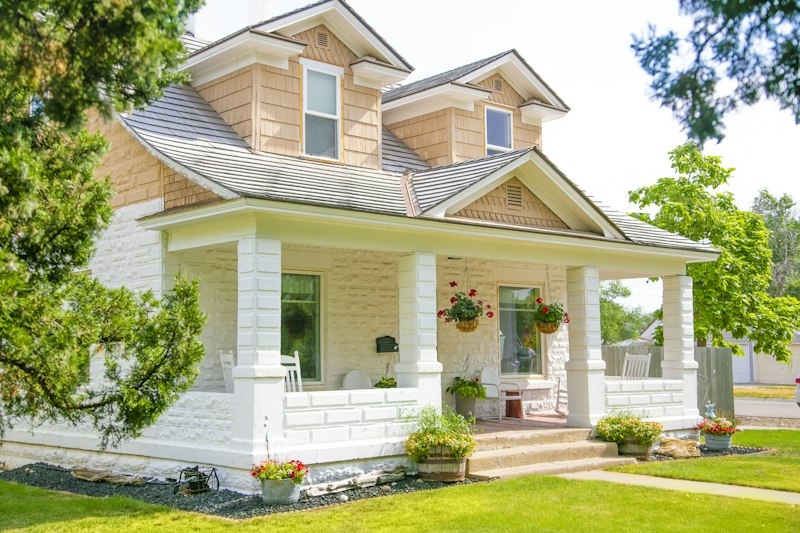
Trophy Custom Homes can help you and your real estate advisor evaluate available land, conservation parcels, and potential teardown opportunities in the Clifton area. Property availability changes frequently, so contact us for current opportunities.
Get Notified First
Join the list to hear about new lots, teardown opportunities, and spec homes in Clifton before they're widely marketed.
Do Your Homework
What to Know Before Building in Clifton
Every Clifton property is different, and none of the topics below should be treated as a property-specific answer. They are the recurring themes Trophy sees in Clifton projects — and the items worth investigating before you buy a property or finish architectural plans, starting with whether your land sits inside the historic town or in the conservation countryside.
Town versus county jurisdiction
A small number of properties sit inside the incorporated Town of Clifton, which brings town approvals and the historic district's protections; the surrounding countryside is unincorporated Fairfax County, governed by county zoning, permits, and inspections.
Which government reviews your project changes the rules, the approval steps, and the design constraints entirely. An in-town lot faces historic scrutiny a county conservation parcel does not.
How to verify: Confirm whether the specific parcel is inside town limits or in unincorporated Fairfax County, and identify the responsible agency before assuming which standards apply.
Historic district review in town
Clifton was declared a National Historic District in 1984, and the historic town carries greater land-use restrictions than much of Fairfax County to protect its nineteenth-century character.
For in-town projects, historic character can influence exterior design, materials, and scale, adding review considerations that don't apply to a conservation parcel outside town.
How to verify: For any in-town property, confirm the current historic-review requirements and approval process with the Town of Clifton before completing exterior design.
R-C conservation zoning and density
Much of the countryside around Clifton is in Fairfax County's Residential-Conservation (R-C) district, which holds density very low — generally on the order of one dwelling per five acres in conservation areas — to protect the Occoquan watershed.
Conservation zoning shapes how a parcel can be used and whether it can be divided, and it reflects a watershed-protection purpose that carries through to stormwater and septic requirements.
How to verify: Confirm the parcel's zoning district and its standards through Fairfax County's mapping tools and Zoning Ordinance before making assumptions about what the acreage allows.
Occoquan watershed protection
The land around Clifton drains to the Occoquan Reservoir, a public drinking-water source, which is the reason for the area's conservation zoning and heightened attention to runoff and on-site systems.
Watershed protection can mean stricter stormwater controls, careful septic siting, and limits on impervious surface — factors that influence where and how large a home can sit.
How to verify: Discuss watershed-related requirements with Fairfax County and a civil engineer early, especially for parcels near streams feeding the reservoir.
Private wells and water supply
Most Clifton-area properties outside town are not on public water and rely on a private well, whose location, depth, yield, and water quality vary from parcel to parcel.
Water supply affects daily livability and design. A low-yield or poor-quality well can require treatment, storage, or a new well — costs better understood before purchase than after.
How to verify: For an existing well, review recent yield and water-quality testing; for a new build, plan for well siting and testing early, and confirm requirements with the Fairfax County Health Department.
Septic capacity and bedroom count
Where public sewer is unavailable, homes use an on-site septic system sized to the soil's absorption capacity, which the county typically ties to the number of bedrooms the system can serve.
Septic capacity, more than raw acreage, often sets the practical size of a Clifton home. A soil evaluation that supports fewer bedrooms than you envisioned can reshape the design — or the decision to buy.
How to verify: Order or review a soil/perc evaluation and confirm the approved (or approvable) septic capacity for the property before finalizing the home's bedroom count or closing on the land.
Topography, drainage, and stormwater
Clifton's countryside is rolling and wooded. Grading, drainage patterns, and watershed-driven stormwater requirements determine how a home, driveway, and drainfield can sit on the terrain.
Slope can add retaining walls, foundation stepping, and drainage structures to a budget — and in this watershed the county expects runoff managed carefully on site rather than pushed downstream.
How to verify: Walk the property after heavy rain, and expect grading and stormwater plans; a civil engineer's early read is inexpensive insurance on rural, sloped land.
Access, gravel roads, and construction staging
Many Clifton-area parcels are reached by narrow country lanes or gravel roads, and homes often sit well back behind long private driveways.
Road and driveway conditions affect emergency-vehicle access, where materials and equipment can be staged, and the cost of building a driveway that holds up over rural terrain.
How to verify: Confirm legal access and any shared-driveway easements, and have your builder assess road and driveway conditions and construction access before you commit to a parcel.
Tree conservation and rural character
Mature woodland is central to Clifton's character, and Fairfax County applies tree preservation and canopy requirements during land development, including many single-family projects.
Significant trees constrain staging, grading, driveway routing, and home placement — but they are also part of what makes a Clifton parcel worth buying. Preserving the right trees is both a requirement and a strategy.
How to verify: Identify significant trees on a survey and involve an arborist where large specimens sit near the likely building area, driveway, or septic field.
Permits, reviews, and sequencing
New homes in unincorporated Fairfax County are permitted through the county's online PLUS system, with building plan review and, for rural parcels, site, grading, and septic review; in-town projects add town approvals.
Review cycles are a schedule input you don't fully control, and a septic, watershed, or historic question can pause everything else. Complete, well-coordinated plans are the best way to protect a timeline.
How to verify: Ask any builder you interview to walk you through the current county — and, if in town, town — process step by step, and be skeptical of anyone quoting guaranteed approval timelines.
A Recommendation From Tom Byrne
“Clifton is special because it's really two places — the little historic town and all that conservation land around it — and they play by different rules. After four decades of building out this way, my advice holds: bring your builder in before you buy the parcel or finish the plans. I've seen families set their heart on a home only to find the soil would support fewer bedrooms of septic, or that a gravel road and a long driveway changed the whole budget. A beautiful home still has to fit six things — the property, the town or county rules, the neighborhood, how your family lives, the budget, and the schedule. Walk a Clifton property with us early, and we can usually tell you where the land, the water, and the watershed help you or fight you before you've committed real money.”
— Tom Byrne, Founder, Trophy Custom Homes
Free & No Obligation
Request Your Free Project Feasibility Assessment
Before buying land, purchasing a teardown property, completing architectural plans, or committing to a major renovation, meet with Tom Byrne and the Trophy Custom Homes team. The assessment gives you early clarity on whether your vision, property, priorities, and preliminary investment range appear aligned — before you spend heavily on design or close on the wrong property.
What Your Assessment Includes
Review of the lot, existing home, access, surroundings, and visible conditions that could influence the project.
Identification of county, zoning, HOA, environmental, and other requirements that may need further investigation for your property.
Consideration of property configuration, topography, drainage, trees, utilities, easements, and probable site-development needs.
For remodeling prospects — structural changes, additions, layout improvements, and whether renovation or rebuilding deserves further study.
How you live, entertain, work, host family, and want the home to support the next stage of life — including aging-in-place planning.
A candid discussion of whether the desired scope and preliminary investment range appear reasonably aligned.
The surveys, engineering, architecture, due diligence, or professional evaluations that should come next — in the right order.
The Project Feasibility Assessment provides preliminary guidance based on information available at the time of the meeting. It is not a property inspection, appraisal, engineering report, architectural study, legal opinion, guaranteed construction estimate, or confirmation of governmental approval. Additional professional evaluations may be recommended.
The Building-on-Your-Lot Guide
Now AvailableTrophy's Building-on-Your-Lot Guide walks you through the questions that matter before you buy land or commit to a design:
- How to evaluate land and what to verify before buying
- Questions to ask any builder you interview
- Site-development costs buyers commonly underestimate
- Zoning, permitting, and utility considerations
- Budget planning and the design-build sequence
- Common mistakes to avoid
Read the full guide online or download the PDF — free. And for alerts about new lots, teardowns, and spec homes in the area, join the notification list below.
Questions We Hear Most
Building in Clifton: Frequently Asked Questions
Explore More