

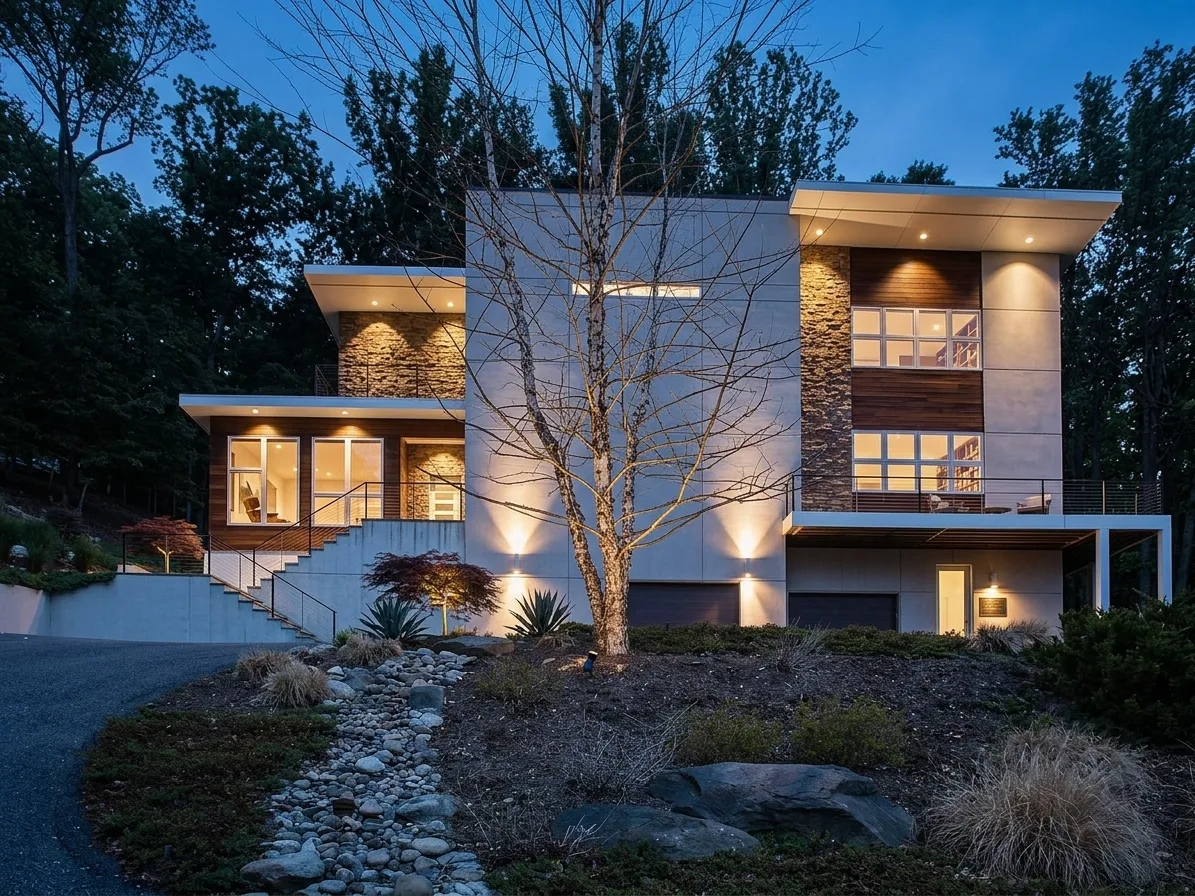
Building a luxury custom home starts with more than a floor plan. It starts with choosing the right location, understanding what your property can support, and finding a builder who can turn your priorities into a home that works for everyday life.
For homeowners comparing luxury home builders in Maryland, Virginia, and Washington, DC, local experience matters. An estate property in Potomac presents different opportunities from an established neighborhood in Bethesda, a teardown lot in McLean, or a constrained urban site in the District.
Trophy Custom Homes brings more than 40 years of experience and over 350 completed homes across the region. Our approach begins with understanding how you want to live—and then coordinating the design, property considerations, and construction decisions around that vision.
What Makes a Home Truly Custom?
A custom home should do more than offer a selection of finishes. It should reflect your routines, your property, and the way your needs may change over time.
That might mean a main-level primary suite, a kitchen designed for frequent entertaining, a quiet office away from family gathering spaces, or a covered outdoor area that feels like an extension of the living room.
Before thinking about square footage, consider:
- Daily routines: Where will you enter, store belongings, work, cook, and unwind?
- Hosting: Do you need formal entertaining rooms, flexible gathering areas, or overnight guest space?
- Privacy: How should bedrooms, windows, and outdoor living areas relate to neighboring properties?
- Long-term comfort: Would wider circulation paths, fewer steps, or space for a future elevator make sense?
- Maintenance: Which materials and systems fit the amount of upkeep you want?
Luxury is not simply a larger home. It is a home whose layout, materials, and details serve you well.
Building a Luxury Home in Maryland
Maryland offers a range of settings for custom homes, including established neighborhoods in Bethesda and larger residential properties in Potomac.
The right approach depends on the individual lot—not just its address or acreage.
Bethesda: Making the Most of an Established Neighborhood
In Bethesda, a custom home may involve replacing an existing house on a property surrounded by established homes and mature landscaping.
Early planning should address the buildable area, driveway access, grading, tree considerations, and the relationship between the proposed home and its neighbors. A generous interior does not necessarily require pushing the house to every available edge of the lot. Thoughtful room placement and circulation can make the home feel spacious while preserving useful outdoor space.
Potomac: Connecting the House to the Property
For a larger property in Potomac, planning extends beyond the house itself. The arrival sequence, garage placement, outdoor entertaining areas, views, and landscape design should work together.
A larger lot does not automatically mean every part of it can be built on. Easements, slopes, drainage, and utility or septic requirements, where applicable, can influence where the home belongs.
Before purchasing land or finalizing a design, have the property evaluated for your intended project.
Explore local building considerations in Bethesda and Potomac.
Building a Luxury Home in Northern Virginia
Northern Virginia includes many established communities suited to custom-home construction, including McLean, Great Falls, Vienna, and Fairfax.
Some buyers already own a property they love. Others are searching for a lot or an older home to replace. In either case, involving a builder early can help identify important constraints before they become expensive design changes.
McLean and Great Falls: Planning for the Full Living Experience
For homeowners considering McLean or Great Falls, the wish list may include expansive gathering spaces, private guest accommodations, home offices, or substantial outdoor living areas.
The challenge is making those features feel connected rather than simply adding rooms. The placement of stairs, hallways, service spaces, and windows has a significant effect on how the home lives.
Site planning also deserves attention. Topography, access, utilities, and the location of neighboring homes can influence both the design and the construction budget.
Vienna and Fairfax: Designing Around an Established Lot
In Vienna and Fairfax, rebuilding on an existing residential property can offer an opportunity to stay in a familiar community while creating a home suited to current needs.
A feasibility review should consider demolition, utility connections, setbacks, grading, and construction access. Confirm the governing jurisdiction early: a mailing address alone may not tell you which city, town, or county requirements apply.
These details are easier to address before a design is finalized.
Find location-specific guidance for McLean, Great Falls and Vienna.
Building a Custom Home in Washington, DC
Custom-home projects in Washington, DC can require a different approach from suburban construction.
Depending on the property, planning may involve narrow access, nearby structures, limited staging space, or historic-district review. Those conditions can affect design choices, construction logistics, and scheduling.
For a District project, ask potential builders how they will evaluate:
- Access for deliveries and construction equipment.
- Work near adjoining or closely spaced buildings.
- Applicable zoning and historic-review requirements.
- Demolition or site-preparation needs.
- Space for material storage and construction staging.
Not every DC property has the same restrictions. The important step is evaluating the specific site before committing to a design or schedule.
Review Trophy’s community guides for Georgetown and Chevy Chase, DC as starting points for a property-specific discussion.
Choose Experience That Fits Your Property
A large estate lot, an established suburban teardown and a constrained urban site require different planning conversations. Ask to see a relevant completed project and discuss how the team evaluated its access, grading, utilities and design constraints.
Use our eight questions for choosing a custom home builder for a structured interview, and explore Trophy’s completed-home portfolio for examples of our work.
What Does a Luxury Custom Home Cost in the DC Region?
There is no single price that accurately represents every luxury custom home in Maryland, Virginia, and Washington, DC.
Total project cost depends on the property, site preparation, size, architectural complexity, structural requirements, materials, mechanical systems, and finish selections.
A cost-per-square-foot figure can be a starting point, but it should never stand alone. Ask what square footage is being counted and whether the figure includes land, site work, design, permits, and exterior improvements.
The most useful first step is a project-specific conversation about your property, priorities, and overall investment range.
For a deeper look at what influences local budgets, read our regional custom-home cost guide. For site evaluation, start with the Building-on-Your-Lot Guide.
Should You Buy a Lot Before Choosing a Builder?
You can, but involving a builder before purchasing a lot can help you make a more informed decision.
A property may look ideal while presenting challenges related to grading, easements, access, utilities, or the available building envelope. Reviewing those conditions early helps you understand whether the home you envision is practical for the site.
If you already own land, begin with a feasibility discussion before investing heavily in detailed plans.
If you prefer an existing new-construction opportunity, explore Trophy’s homes for sale.
Bring a Project Brief to Your First Builder Conversation
A search for a luxury custom home builder in DC, Maryland or Virginia is a starting point. To compare builders meaningfully, give each team the same information about the home you want and the property you are considering. You do not need completed architectural drawings.
- Your location: Share a property address or listing, or the communities you are considering. Explain whether you own the land, are evaluating a purchase, or may replace an existing house.
- Your daily needs: Identify must-haves such as a main-level primary suite, private workspace, guest accommodations or accessible circulation. Separate these from features you could reconsider.
- Your total investment range: Ask which costs are included in the discussion. Land, demolition, site work, design, permits, construction, landscaping and contingency should not be confused with a house-only estimate.
- Your timing: Explain any move, school-year or lease deadline. Ask what must be confirmed before the builder can offer a project-specific schedule.
- Your existing team: Bring any survey, preliminary plans or information from your architect or real estate professional. Ask who will coordinate unresolved site and design questions.
Compare the next steps each builder proposes—not just an early price. A useful response identifies what is known, what needs investigation, who is responsible and which decisions affect cost or timing. Read Trophy’s custom-home building process to understand the path from initial planning through construction.
Use our custom-home and design-build services to distinguish a fully custom project from a renovation or a home based on an existing plan. For long-term accessibility priorities, explore aging-in-place home design.
Start Your Custom-Home Conversation With Trophy
Choosing among luxury home builders in Maryland, Virginia, and DC is about finding the right combination of experience, design understanding, and clear communication.
With more than 40 years of experience and over 350 homes completed across the region, Trophy Custom Homes helps homeowners explore what is possible—from building on a property they already own to planning a new home in a different community.
Bring your ideas, inspiration, and questions. You do not need a finished floor plan to begin.
Explore Trophy’s luxury custom homes in DC, Maryland and Virginia, then use the regional guidance above to prepare for a property-specific conversation.
Schedule a consultation with Trophy Custom Homes to discuss your location, priorities, and next steps.